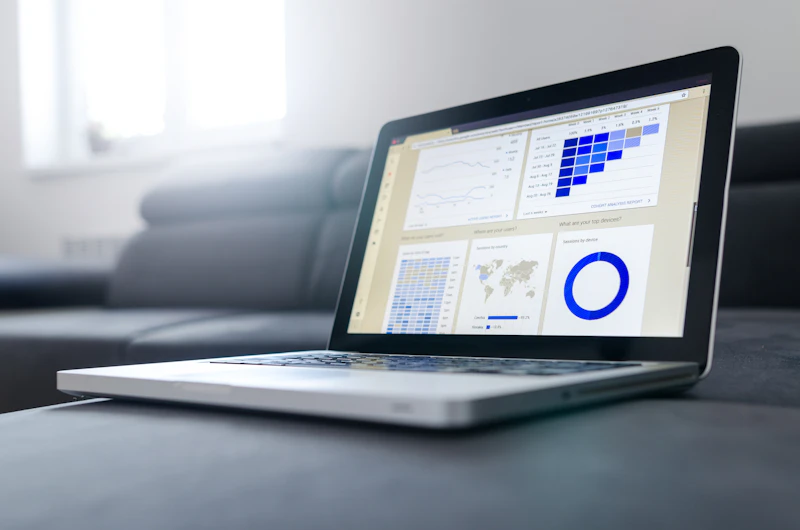
Python's popularity in data work isn't an accident — its syntax is readable enough for beginners, yet its libraries are powerful enough for production-grade analysis pipelines used by major tech companies.
The Three Libraries to Learn First
NumPy handles fast numerical computation on arrays — the mathematical foundation underneath most data libraries. Pandas builds on that to give you DataFrames, the spreadsheet-like structure most analysts spend their time inside, with powerful filtering, grouping, and cleaning tools. Matplotlib (and its more polished cousin, Seaborn) turns that cleaned data into charts.
A Realistic Learning Path
Skip trying to learn "all of Python" before touching data. Learn just enough core syntax — variables, loops, functions — then move directly into Pandas with a real, messy dataset. Concepts stick far better when you're solving an actual cleaning or analysis problem than when you're working through abstract exercises.
Our Basic Python and Advanced Python courses follow exactly this order, prioritising practical fluency over textbook completeness.